Where do the unremembered scenes of a dream go?
What happens to a train of thought when you forget it?
They go to True Nothingness. Not fake nothingness,
because that's still a thing. But real and complete nihility.
What's wrong? How is nonbeing any less a miracle than being?
Don't we all wish we could go to that Anti-Place sometimes?
If like a sleeping man we could effortlessly dissolve the world:
No unsatisfying past, burdensome present, or doubtful future,
Nor aching body, speedy mind or weak heart,
Not even a consciousness of outside or inside that ever was at all.

Poems, journals and assorted writings of every sort about the details of my adventures in both the outer and inner worlds.
Friday, October 18, 2013


Thursday, October 17, 2013
Blind to Heaven and Earth [Poem]
Being cerebral, I am blind to Heaven and Earth.
My thoughts, as mist, obscure this world of simple magic.
My eyes see the leaves, but not their labyrinths of texture.
My ears hear the rain, but not its soothing symphonies.
To be busy hoping, to be busy fearing, to be.
But the vision of this ocean has popped open my Mind,
revealing the vastness! There's so much going on out there!
Oh my God! This world, so much color, I could drown in it!
The redness of red, the greenness of green!
Fwooommmssshhh, Fwwwwoooommmsssshh...
Wwwwwoooossshhh, Wwooooossssssshhhhhhhh...
The mantras of the Ocean and Wind hypnotize me!
Every sight, every sensation is synthesized in this special space!
Mind, Body, and Other totally brought together as one experience!
Such incredible presence! Yeah, this is what life is all about!!!
The memory of that place is as imprinted in my mind as a carved letter on a rock.
I can bring myself back to that time and place with just a thought.
My thoughts, as mist, obscure this world of simple magic.
My eyes see the leaves, but not their labyrinths of texture.
My ears hear the rain, but not its soothing symphonies.
To be busy hoping, to be busy fearing, to be.
But the vision of this ocean has popped open my Mind,
revealing the vastness! There's so much going on out there!
Oh my God! This world, so much color, I could drown in it!
The redness of red, the greenness of green!
Fwooommmssshhh, Fwwwwoooommmsssshh...
Wwwwwoooossshhh, Wwooooossssssshhhhhhhh...
The mantras of the Ocean and Wind hypnotize me!
Every sight, every sensation is synthesized in this special space!
Mind, Body, and Other totally brought together as one experience!
Such incredible presence! Yeah, this is what life is all about!!!
The memory of that place is as imprinted in my mind as a carved letter on a rock.
I can bring myself back to that time and place with just a thought.
Monday, October 14, 2013
Talking On A Bus [Short Story]
I scrambled onto the bus and looked at the time: 8:00. I’m going to be on here for about fifty minutes. I hate these obscenely long bus rides, so I usually bring a book with me. Always something I ordered online, because local bookstores are too mainstream to meet my tastes. But today, after rummaging through my bag for two minutes, I realized I left the book I wanted to read on my bookshelf. God dammit.
Thankfully I was able to steal a seat for myself so I could just sit down and listen to my iPod. Except it was dead. Come on! Oh well. I can still put on the earphones from the iPod to feign listening to music. That way no one will talk to me.
With no book and no music, I just let the sounds of the city – the bus driving along, the cars honking, the people walking about – blur out everything else . That way I could space out in peace. Whenever my attention is totally withdrawn into my thoughts, it’s as though the world, instead of the chatter of my mind, is what’s unreal and distracting me.
So there I was, happily playing in la-la land, when a completely obnoxious person sitting by the back of the bus started to speak. I’d seen him on the bus before, his name was George. I don’t think he tried to be loud, he just had that kind of naturally deep and booming voice. “So… how’s your day been?” I looked over out of curiosity, and saw he wasn't really talking to anyone in particular. “Good”, replied a sorta-pretty blonde-haired girl, her neck tilted down, absorbed into her cellphone. Let’s call her ‘Belle’. “Good”, replied a man wearing a suit that was so fancy he stood out like a sore thumb. Let’s call him “Dave”. I had never seen either of them on this bus before.
I quickly turned back so he wouldn't think I was listening to him or, worse yet, feel obligated to reply. However, I could still see their reflections in the window.
Then, a return to silence. That’s the end of that, right? It would have been if George hadn't decided it was time for round two about three minutes later. “I hate it when I feel alone in a crowd full of people. Why doesn’t anyone actually talk to each other anymore?”. No one responded.
“Fine,” He continued. He sure was pretty damn set on having his way, wasn't he? “I guess I'll start the conversation. Listen, this hour of the day is a pretty solid routine for me, you know. I get up, get my coffee, and get this bus to go to work from 9-5. Usually I'm alone and I start texting or zoning out or whatever this whole time. It’s just unusual to see two strangers here.” He was talking about ‘Belle’ and ‘David’, who are now singled out from among everyone and probably felt forced to respond. “Long story short, The bus won't reach my stop until another twenty-minutes or so, so I'd appreciate if you told me why you're both here so you can satisfy my curiosity”. George went on. He was quite an orator, I’ll give him that.
‘Belle’ took her focus away from her cellphone and tried to think of something to say. Oh boy. They took the bait. He’s going to reel them into a conversation, and because they’re all really loud everyone in the bus is going to have to hear it too - rather they like it or not.
‘David’ remarked,“Well, we talked just then, didn't we? You asked how my days been, I said good. What more do you want?”
George instantly replied, “You call that talking? That's not talking, that's just filling the air with words. Talking is genuine, it's a connection, it's... communication. I tell you, there hasn't been a single real word said since we sat down here.” Now the awkwardness everyone in the bus felt was so thick you could feel it. I looked at my watch. Thirty more minutes to go. Oh god. Hurry up.
‘Belle’ put her cellphone into her pocket, to apologize for not listening to George before. “Well, I just moved into a new apartment, and taking this bus is an easier way to get there than walking. So you’ll be seeing a lot more of me.” she said.
“So why did you move out of your old apartment?” “Well, my boyfriend broke up with me, and I wanted to get away from him”. Now, I'm hardly an empath, but I think anyone would agree that poor ‘Belle’ felt George was probing a little too deeply. To get the focus away from her she turned to David and said, “Well, what about you? What do you want to talk about?” while faking a look of genuine interest.
“My mother died yesterday”. Everyone in the bus glanced at him, awkwardly, and then returned to their own little worlds, like turtles retreating into their shells. At this point I would have loved to have done that myself, but I was too curious for my own good. The poor man was tearing up. “I haven’t spoken to her in ten years. The last words I said to her were, ‘I’ll never forgive you for as long as I live!!!’. It was for a stupid reason, too. I’m on my way to her funeral, and I'm going to have to face the fact that for the last ten years of her life she thought her son hated her.”
Everyone in the bus was trying very hard to ignore him, except ‘Belle’ and George, who were paying attention to him now more than ever, like they were his therapist or his best friends or something. Their faces were both lit up with the light of genuine concern and compassion, which considering the fact that they were all strangers, was kinda sweet - kinda. George patted
‘David’s’ shoulder.
“Oh my God, that’s so sad” ‘Belle’ said, with a bit of a cry coming on, too. It’s obvious she wanted to say something to cheer him up, but didn't know what to say. “I'm sure she forgave you in her heart”. Psh,that was so cheesy. “You really think so?” “Oh yeah. I know”. She said it with so much certainty that he believed it, and the tears paused. “I think so, too” George added.
The bus halted. The girl stood up and gave off a sign of irritation. “I have to go. Be strong. She forgave you and you forgave her” the girl said. “Aw shoot man, I get off here too” George noticed. He gave the crying ‘David’ some tissues. “You’ll make peace with her tonight”. That was the last thing he said before walking off. As they both walked off, everyone watched them, just as intently as they were watching their cell phones or ipods just a moment before.
I noticed they were engagedly talking to each other after they left the bus. The next time these three people meet they won’t be strangers.
As she left I thought, y’know, they did a really good thing. And here all these people are, trying to
hide in their own little worlds, while there are people suffering! Imagine how touching it would be if everyone in this bus offered sympathy. I mean, doesn't everyone want to feel happiness and avoid suffering? If we all realized just that one truth we’d be inspired to put smiles on our faces and wipe away each other’s tears. That would never happen, though. Nope. People are too busy spacing out, too busy being apathetic, too busy worrying about “me, me, me”. It’s awful. People are so selfish.
And those were the thoughts I dwelt on when the bus stopped again and I left to go to work. The impressions of the scene were washed away by the primary concerns of my day like how my shift is going to be, what I’m going to do for lunch, and what I'm gonna do when I get home. I hope there are people working today that I like. I wonder if I’ll have a good day today?

Thankfully I was able to steal a seat for myself so I could just sit down and listen to my iPod. Except it was dead. Come on! Oh well. I can still put on the earphones from the iPod to feign listening to music. That way no one will talk to me.
With no book and no music, I just let the sounds of the city – the bus driving along, the cars honking, the people walking about – blur out everything else . That way I could space out in peace. Whenever my attention is totally withdrawn into my thoughts, it’s as though the world, instead of the chatter of my mind, is what’s unreal and distracting me.
So there I was, happily playing in la-la land, when a completely obnoxious person sitting by the back of the bus started to speak. I’d seen him on the bus before, his name was George. I don’t think he tried to be loud, he just had that kind of naturally deep and booming voice. “So… how’s your day been?” I looked over out of curiosity, and saw he wasn't really talking to anyone in particular. “Good”, replied a sorta-pretty blonde-haired girl, her neck tilted down, absorbed into her cellphone. Let’s call her ‘Belle’. “Good”, replied a man wearing a suit that was so fancy he stood out like a sore thumb. Let’s call him “Dave”. I had never seen either of them on this bus before.
I quickly turned back so he wouldn't think I was listening to him or, worse yet, feel obligated to reply. However, I could still see their reflections in the window.
Then, a return to silence. That’s the end of that, right? It would have been if George hadn't decided it was time for round two about three minutes later. “I hate it when I feel alone in a crowd full of people. Why doesn’t anyone actually talk to each other anymore?”. No one responded.
“Fine,” He continued. He sure was pretty damn set on having his way, wasn't he? “I guess I'll start the conversation. Listen, this hour of the day is a pretty solid routine for me, you know. I get up, get my coffee, and get this bus to go to work from 9-5. Usually I'm alone and I start texting or zoning out or whatever this whole time. It’s just unusual to see two strangers here.” He was talking about ‘Belle’ and ‘David’, who are now singled out from among everyone and probably felt forced to respond. “Long story short, The bus won't reach my stop until another twenty-minutes or so, so I'd appreciate if you told me why you're both here so you can satisfy my curiosity”. George went on. He was quite an orator, I’ll give him that.
‘Belle’ took her focus away from her cellphone and tried to think of something to say. Oh boy. They took the bait. He’s going to reel them into a conversation, and because they’re all really loud everyone in the bus is going to have to hear it too - rather they like it or not.
‘David’ remarked,“Well, we talked just then, didn't we? You asked how my days been, I said good. What more do you want?”
George instantly replied, “You call that talking? That's not talking, that's just filling the air with words. Talking is genuine, it's a connection, it's... communication. I tell you, there hasn't been a single real word said since we sat down here.” Now the awkwardness everyone in the bus felt was so thick you could feel it. I looked at my watch. Thirty more minutes to go. Oh god. Hurry up.
‘Belle’ put her cellphone into her pocket, to apologize for not listening to George before. “Well, I just moved into a new apartment, and taking this bus is an easier way to get there than walking. So you’ll be seeing a lot more of me.” she said.
“So why did you move out of your old apartment?” “Well, my boyfriend broke up with me, and I wanted to get away from him”. Now, I'm hardly an empath, but I think anyone would agree that poor ‘Belle’ felt George was probing a little too deeply. To get the focus away from her she turned to David and said, “Well, what about you? What do you want to talk about?” while faking a look of genuine interest.
“My mother died yesterday”. Everyone in the bus glanced at him, awkwardly, and then returned to their own little worlds, like turtles retreating into their shells. At this point I would have loved to have done that myself, but I was too curious for my own good. The poor man was tearing up. “I haven’t spoken to her in ten years. The last words I said to her were, ‘I’ll never forgive you for as long as I live!!!’. It was for a stupid reason, too. I’m on my way to her funeral, and I'm going to have to face the fact that for the last ten years of her life she thought her son hated her.”
Everyone in the bus was trying very hard to ignore him, except ‘Belle’ and George, who were paying attention to him now more than ever, like they were his therapist or his best friends or something. Their faces were both lit up with the light of genuine concern and compassion, which considering the fact that they were all strangers, was kinda sweet - kinda. George patted
‘David’s’ shoulder.
“Oh my God, that’s so sad” ‘Belle’ said, with a bit of a cry coming on, too. It’s obvious she wanted to say something to cheer him up, but didn't know what to say. “I'm sure she forgave you in her heart”. Psh,that was so cheesy. “You really think so?” “Oh yeah. I know”. She said it with so much certainty that he believed it, and the tears paused. “I think so, too” George added.
The bus halted. The girl stood up and gave off a sign of irritation. “I have to go. Be strong. She forgave you and you forgave her” the girl said. “Aw shoot man, I get off here too” George noticed. He gave the crying ‘David’ some tissues. “You’ll make peace with her tonight”. That was the last thing he said before walking off. As they both walked off, everyone watched them, just as intently as they were watching their cell phones or ipods just a moment before.
I noticed they were engagedly talking to each other after they left the bus. The next time these three people meet they won’t be strangers.
As she left I thought, y’know, they did a really good thing. And here all these people are, trying to
hide in their own little worlds, while there are people suffering! Imagine how touching it would be if everyone in this bus offered sympathy. I mean, doesn't everyone want to feel happiness and avoid suffering? If we all realized just that one truth we’d be inspired to put smiles on our faces and wipe away each other’s tears. That would never happen, though. Nope. People are too busy spacing out, too busy being apathetic, too busy worrying about “me, me, me”. It’s awful. People are so selfish.
And those were the thoughts I dwelt on when the bus stopped again and I left to go to work. The impressions of the scene were washed away by the primary concerns of my day like how my shift is going to be, what I’m going to do for lunch, and what I'm gonna do when I get home. I hope there are people working today that I like. I wonder if I’ll have a good day today?

Monday, October 7, 2013
Making Earth Heaven [Poem]
Who would want to be on their death bed and realize,
"I had so many days each year to change this world I despise?"
Like being given a precious jewel and then throwing it away,
You didn't steer your life to a higher goal, you just drifted astray.
Let's make real all of those dreams of youth,
Let's fully realize all of these ecstatic truths:
Compassion, Wisdom, Abundance, Peace, and Freedom,
so they can be manifest in our own personal kingdoms.
We have the will! We can pull Heaven down to Earth!
We'll strive & struggle until all are full of mirth!!!
Heaven is the far-away ideal,
Earth is the nitty-gritty real,
And we are the bridge in-between,
making dreams reality for all beings.
"I had so many days each year to change this world I despise?"
Like being given a precious jewel and then throwing it away,
You didn't steer your life to a higher goal, you just drifted astray.
Let's make real all of those dreams of youth,
Let's fully realize all of these ecstatic truths:
Compassion, Wisdom, Abundance, Peace, and Freedom,
so they can be manifest in our own personal kingdoms.
We have the will! We can pull Heaven down to Earth!
We'll strive & struggle until all are full of mirth!!!
Heaven is the far-away ideal,
Earth is the nitty-gritty real,
And we are the bridge in-between,
making dreams reality for all beings.
Saturday, September 21, 2013
The Inner Revolution
The Mind is the king of our lives. From his throne in the brain he commands our body and speech for good or for ill. The law of the land is nothing other than what society or ourselves have conditioned our Mind to be like. In real life, a new order or direction is caused by a revolution. People get fed up with the way things are and radically change. In our own internal lives, we too can wage a revolt against the old King and reform his habits so we can lead better lives.
Think about it: every experience you or anyone else has ever had or will ever have was preceded by Mind. Before you could perceive anything in this room, let alone come here at all, Mind needed to be there first, as a first cause. Similarly, a war or a murder starts with a single unchecked angry thought. A great philanthropic acts began with a single cultivated thought of kindness.
So from that, we can conclude that how we use our Mind is a huge determining factor in how we live our life, and so the transformation of the Mind, the inner revolution, is the most monumental thing we can ever attempt. The mastery of our Mind is the mastery of our Life.
With just a little bit of willpower, and some reminders here and there, we can turn our life into a Psychological Gymnasium, where every day and every situation can be a moment to refine our mind, to cultivate good habits and discard bad ones, to work out our mental faculties of intelligence and awareness and exercise our love.
Meditation and Mindfulness is how we do it. If you want to take control of your life and mind, you have to be there for it. If you are driving you have to be paying attention to forks on the road and skillful ways to get to where you want to go, otherwise you are just on auto-pilot, and who knows where that might take you. It is how we realize that there is an empty space between our thoughts we can rest in, that we can control our mind instead of our mind controlling us, and that we can direct our attention to certain objects instead of objects directing our attention.
This is not something new, it is not something foreign that I am trying to introduce into your head. To a certain extent you are already a master of your mind, already a master of meditation, you just didn’t know it. After all, you seem to have no problem being mindful of your worries or your fears. You have no problem meditating on desire, fantasies, and hate. All you have to do is shift a bit: Instead, be mindful of what you have and the good things in your life. Meditate on contentment.
We have to understand that our mind is the most fertile of all soil. Anything that is planted there will start to grow with the sunlight and water of our attention, and produce the fruit of action. We can walk into our house and think, “I want a bigger house, I want more things”, and that produces a life of discontentment and desire. Or, we can walk into our house and think “I’m glad I have a house. I’m glad I have things”, and that produces a life of contentment and peace. And it all starts in the mind, with a single thought, your whole viewpoint is revolutionized. It’s that simple.
Think about all the places people want to go and all the things they want. They think that a change of home,a vacation, a change of job, or getting the latest and coolest thing will give them the peace and contentment they so naturally want. But if we think some kind of change in the exterior world will bring the change of Mind we are actually seeking, then we have fooled ourselves because that is not how it’s done. The kind of change that brings peace and contentment can only come from within, because the obstacles of peace and contentment are also within.
We think we have no control over our Minds or our Life because for so many of us thoughts of discontentment have been so thoroughly ingrained by ourselves or society. They seem automatic. But with just a little conscious effort the thoughts of contentment and joy can become just as automatic. Try it and see.
It’s the difference between a life of “Everything sucks” and “Aaaaah! Life is good”. Money is not the difference, romantic partners are not the difference, fame is not the difference, a 1st place certificate on your wall is not the difference, one little thing happening differently in your past is not the difference, one little thing happening in your future is not the difference. A mind with habits of peace is the difference.
People think that being calm and being active are two contrary things. If you’re active you need to be doing a million things and stressing out about it, if you’re calm you need to be lazing on the couch. It couldn’t be any farther from the truth. We can be actively calm and calmly active. When we are actively calm, we are genuinely at peace instead of just thinking about it, cutting out the weeds of anxiety with gentleness and equanimity. When we are calmly active, we are doing one thing with our fullest attention and therefore doing it efficiently. When we are calm and doing something the effect will always be better than if we were in a state of stress or anxiety while doing it.
We stumble through our lives like robots because we have gotten too used to everything. You’ve heard it before: When you were a kid you were full of wonder because everything was new and magical, but now you have become blind to the sight of the sunset and deaf to the tune of the winds because you think it’s just the same old sun and the same old winds.
Our habituated patterns of reacting to hate with hate and gain with joy cause life to be like a rollercoaster that is constantly vacillating between a pleasant dream and a nightmare. I say “Dream” because a life where being ruled by habits and not really paying attention to what is going on around us is hazy and bewildering, just like a dream.
But when we apply the principle of mindfulness to our lives, we rediscover our footstep and what it feels like to walk - not to be thinking and doing a million things AND walking, but to be literally JUST walking. We rediscover what it is like to breathe, to JUST breath, to JUST see, to JUST hear. It can be done anywhere - in a busy room or in a beautiful nature trail somewhere. When we do it we become surprised, flabbergasted, even at how genuinely peaceful our minds can be. We've been stressing out and worrying so much we think it’s the natural state of mind, but in truth we don’t even know how much more our minds are geared towards tranquility, and how much we will enjoy it.
Discovering the natural tranquility of the Mind is like a parched man wandering in the desert, looking for water to satisfy his thirst. He goes to an oasis and thinks he’s found satisfaction, but it’s actually just a mirage, a self-deception, and he is still just as thirsty as he was before. But when he discovers mindfulness, meditation, and contentment his thirst becomes satiated and he thinks he is having a profound and spiritual experience, but really it is natural for someone to not be thirsty. It is a supremely ordinary experience, and that is what makes it so extraordinary.
It takes practice! I know that from personal experience. It is not like turning on a light, where you flip a switch and suddenly all the darkness is gone. After all, you've conditioned that mind of yours for quite a long time, so it can't be turned around overnight. But you can do it!
Think about it: every experience you or anyone else has ever had or will ever have was preceded by Mind. Before you could perceive anything in this room, let alone come here at all, Mind needed to be there first, as a first cause. Similarly, a war or a murder starts with a single unchecked angry thought. A great philanthropic acts began with a single cultivated thought of kindness.
So from that, we can conclude that how we use our Mind is a huge determining factor in how we live our life, and so the transformation of the Mind, the inner revolution, is the most monumental thing we can ever attempt. The mastery of our Mind is the mastery of our Life.
With just a little bit of willpower, and some reminders here and there, we can turn our life into a Psychological Gymnasium, where every day and every situation can be a moment to refine our mind, to cultivate good habits and discard bad ones, to work out our mental faculties of intelligence and awareness and exercise our love.
Meditation and Mindfulness is how we do it. If you want to take control of your life and mind, you have to be there for it. If you are driving you have to be paying attention to forks on the road and skillful ways to get to where you want to go, otherwise you are just on auto-pilot, and who knows where that might take you. It is how we realize that there is an empty space between our thoughts we can rest in, that we can control our mind instead of our mind controlling us, and that we can direct our attention to certain objects instead of objects directing our attention.
This is not something new, it is not something foreign that I am trying to introduce into your head. To a certain extent you are already a master of your mind, already a master of meditation, you just didn’t know it. After all, you seem to have no problem being mindful of your worries or your fears. You have no problem meditating on desire, fantasies, and hate. All you have to do is shift a bit: Instead, be mindful of what you have and the good things in your life. Meditate on contentment.
We have to understand that our mind is the most fertile of all soil. Anything that is planted there will start to grow with the sunlight and water of our attention, and produce the fruit of action. We can walk into our house and think, “I want a bigger house, I want more things”, and that produces a life of discontentment and desire. Or, we can walk into our house and think “I’m glad I have a house. I’m glad I have things”, and that produces a life of contentment and peace. And it all starts in the mind, with a single thought, your whole viewpoint is revolutionized. It’s that simple.
Think about all the places people want to go and all the things they want. They think that a change of home,a vacation, a change of job, or getting the latest and coolest thing will give them the peace and contentment they so naturally want. But if we think some kind of change in the exterior world will bring the change of Mind we are actually seeking, then we have fooled ourselves because that is not how it’s done. The kind of change that brings peace and contentment can only come from within, because the obstacles of peace and contentment are also within.
We think we have no control over our Minds or our Life because for so many of us thoughts of discontentment have been so thoroughly ingrained by ourselves or society. They seem automatic. But with just a little conscious effort the thoughts of contentment and joy can become just as automatic. Try it and see.
It’s the difference between a life of “Everything sucks” and “Aaaaah! Life is good”. Money is not the difference, romantic partners are not the difference, fame is not the difference, a 1st place certificate on your wall is not the difference, one little thing happening differently in your past is not the difference, one little thing happening in your future is not the difference. A mind with habits of peace is the difference.
People think that being calm and being active are two contrary things. If you’re active you need to be doing a million things and stressing out about it, if you’re calm you need to be lazing on the couch. It couldn’t be any farther from the truth. We can be actively calm and calmly active. When we are actively calm, we are genuinely at peace instead of just thinking about it, cutting out the weeds of anxiety with gentleness and equanimity. When we are calmly active, we are doing one thing with our fullest attention and therefore doing it efficiently. When we are calm and doing something the effect will always be better than if we were in a state of stress or anxiety while doing it.
We stumble through our lives like robots because we have gotten too used to everything. You’ve heard it before: When you were a kid you were full of wonder because everything was new and magical, but now you have become blind to the sight of the sunset and deaf to the tune of the winds because you think it’s just the same old sun and the same old winds.
Our habituated patterns of reacting to hate with hate and gain with joy cause life to be like a rollercoaster that is constantly vacillating between a pleasant dream and a nightmare. I say “Dream” because a life where being ruled by habits and not really paying attention to what is going on around us is hazy and bewildering, just like a dream.
But when we apply the principle of mindfulness to our lives, we rediscover our footstep and what it feels like to walk - not to be thinking and doing a million things AND walking, but to be literally JUST walking. We rediscover what it is like to breathe, to JUST breath, to JUST see, to JUST hear. It can be done anywhere - in a busy room or in a beautiful nature trail somewhere. When we do it we become surprised, flabbergasted, even at how genuinely peaceful our minds can be. We've been stressing out and worrying so much we think it’s the natural state of mind, but in truth we don’t even know how much more our minds are geared towards tranquility, and how much we will enjoy it.
Discovering the natural tranquility of the Mind is like a parched man wandering in the desert, looking for water to satisfy his thirst. He goes to an oasis and thinks he’s found satisfaction, but it’s actually just a mirage, a self-deception, and he is still just as thirsty as he was before. But when he discovers mindfulness, meditation, and contentment his thirst becomes satiated and he thinks he is having a profound and spiritual experience, but really it is natural for someone to not be thirsty. It is a supremely ordinary experience, and that is what makes it so extraordinary.
It takes practice! I know that from personal experience. It is not like turning on a light, where you flip a switch and suddenly all the darkness is gone. After all, you've conditioned that mind of yours for quite a long time, so it can't be turned around overnight. But you can do it!
Tuesday, September 10, 2013
Silence [Poem]
Hey.
I've missed you a lot.
Why do you run away from me?
Absorbed in all that noise, plugged into all those people...
Have you forgotten my soothing subtleties?
Soon I will have passed away into legends,
As you ceaselessly invent technologies that snuff me out,
and cities where you can hide from me altogether.
Why? Why do you do it?
Are you afraid? Are you bewildered?
I promise to you, if you let go of your gadgets
And all of those games, forget your worries and desires,
You'll discover an empty space between your thoughts.
Did you even know it existed? Visit me there sometime.
It's a serene and spacious place.
Come on. Let your breath be the siren song
That lures you to me, the stillness behind all motion,
and from there you can gently slip into my profundity.
When we are together, just think:
I am supremely ordinary.
That is what makes me Extraordinary.
-------------------------------------------
(For those of you who are confused, the "person" speaking in this poem is the personification of silence).
I've missed you a lot.
Why do you run away from me?
Absorbed in all that noise, plugged into all those people...
Have you forgotten my soothing subtleties?
Soon I will have passed away into legends,
As you ceaselessly invent technologies that snuff me out,
and cities where you can hide from me altogether.
Why? Why do you do it?
Are you afraid? Are you bewildered?
I promise to you, if you let go of your gadgets
And all of those games, forget your worries and desires,
You'll discover an empty space between your thoughts.
Did you even know it existed? Visit me there sometime.
It's a serene and spacious place.
Come on. Let your breath be the siren song
That lures you to me, the stillness behind all motion,
and from there you can gently slip into my profundity.
When we are together, just think:
I am supremely ordinary.
That is what makes me Extraordinary.
-------------------------------------------
(For those of you who are confused, the "person" speaking in this poem is the personification of silence).
Thursday, August 29, 2013
Like A Lion's Roar [Poem]
Like a Lion's Roar
Oh, All of this apathy and agitation….
Life-negating cynics drain the fun out of life like a leaking water balloon.
Y’know what? That’s IT!!!!
I’m going to the highest mountaintop and declaring,
With all of the confidence of a king,
With all of the loudness of a lion:
“Clarity and Peace are the natural states of Mind!
Love and Laughter the essence of the heart!
Vitality and Energy the original intentions of the body!
Beauty and Profundity the innate qualities of the world!!
Goodness and Fun the primordial plan of Life!!!
Same goes for everyone! People are awesome!"
Upon hearing, the cowardly hyenas ran away.
They don’t understand the Brave and Mighty Lion.
“No! Life Sucks!” they grumpily growl,
As they hide in caves of fear, doubt, apathy, and cynicism.
I hope one day they will peak out & see, like a shining sun,
The basic goodness of the world, life, and themselves.
Until then, I’ll just have some fun in the
Fields of Freedom with my friends.
Why not come and join us?

Oh, All of this apathy and agitation….
Life-negating cynics drain the fun out of life like a leaking water balloon.
Y’know what? That’s IT!!!!
I’m going to the highest mountaintop and declaring,
With all of the confidence of a king,
With all of the loudness of a lion:
“Clarity and Peace are the natural states of Mind!
Love and Laughter the essence of the heart!
Vitality and Energy the original intentions of the body!
Beauty and Profundity the innate qualities of the world!!
Goodness and Fun the primordial plan of Life!!!
Same goes for everyone! People are awesome!"
Upon hearing, the cowardly hyenas ran away.
They don’t understand the Brave and Mighty Lion.
“No! Life Sucks!” they grumpily growl,
As they hide in caves of fear, doubt, apathy, and cynicism.
I hope one day they will peak out & see, like a shining sun,
The basic goodness of the world, life, and themselves.
Until then, I’ll just have some fun in the
Fields of Freedom with my friends.
Why not come and join us?

Monday, August 26, 2013
Random Haikus [Poem]
Tortured by Desire
Drowning in Discursiveness,
Forgive me, My Mind.
-
Drowning in Discursiveness,
Forgive me, My Mind.
-
Drain myself of Life,
Body lazing, Mind coarsing:
Death by Apathy.
-
Breath, one, Breath two, Breath…
Becoming single-pointed…
Ah! I just lost it.
-
Gaze at the Future:
Pure Potentiality.
Utterly Groundless.
-
Walking with barefeet-
Insects live in small world, too
Crawling and Creeping
-
Astral Dimension:
Subtle, Light like a feather,
Its Ineffable.
-
Physical Dimension:
Solid... and continuous?
I think its boring.
-
This Meditation:
Struggle with an untamed horse.
It doesn't like that.
-
This Meditation:
I'm melting into stillness,
silence is soothing.
-
On The Internet:
I...want...to..see..and..know..ALL!
End up with nothing.
Monday, August 19, 2013
Emotions [Poem]
Anxiety, Sorrow, Anger, Envy.
Joy, Compassion, Love, Silliness.
Enthusiasm, Awe, Heartbreak, and ineffability.
You're all strangers to a person like me,
an unexpected visitor knocking on the door of the present moment.
I didn't let you in, so why are you making yourself feel welcome?
Oh, know what? That's fine.
I'll get to know you a little,
those vibes and sensations,
How you play the appropriate background music of the present moment,
coloring it with a distinct mood. If not for you, it would be dull and grey!
Sometimes I don't care if your presence is toxic or nectarine,
You remind me I'm not a lifeless robot that can only
COMPUTES thoughts and appearances.
Yes, you make me LIVE them!
But when I try too hard to make you feel welcome,
you slip away, like sand between my fingers.
Ah, the inexpressibly subtle art of really emoting!
Maybe one day I'll master that art,
but,
until then these exceptional moments of great feeling
will run away from my intellectual ego-mind
like little children running from the boogeyman.

Joy, Compassion, Love, Silliness.
Enthusiasm, Awe, Heartbreak, and ineffability.
You're all strangers to a person like me,
an unexpected visitor knocking on the door of the present moment.
I didn't let you in, so why are you making yourself feel welcome?
Oh, know what? That's fine.
I'll get to know you a little,
those vibes and sensations,
How you play the appropriate background music of the present moment,
coloring it with a distinct mood. If not for you, it would be dull and grey!
Sometimes I don't care if your presence is toxic or nectarine,
You remind me I'm not a lifeless robot that can only
COMPUTES thoughts and appearances.
Yes, you make me LIVE them!
But when I try too hard to make you feel welcome,
you slip away, like sand between my fingers.
Ah, the inexpressibly subtle art of really emoting!
Maybe one day I'll master that art,
but,
until then these exceptional moments of great feeling
will run away from my intellectual ego-mind
like little children running from the boogeyman.

Wednesday, June 26, 2013
The Modern Apocalypse Myth
It is impossible for a society to exist without some kind of Myth. A myth is like a society's collective dream. Just like our personal, nightly dreams, the content is deeply symbolic and archetypal , allowing the truth hidden in the myth to cut through into a deeper part of ourselves.
But the myths of today's societies are different. This is normal, because myths evolve over time to fit the societies they are paired with.
Our present myths are quite a bit different than the ones that have become before. Ours are secularized - separated from the Spiritual elements of life, in much the same way that around the bronze age our mythology was separated from the Natural elements of life. Our mythology is also somewhat incoherent, because whereas before we had organized Temples now we have the Cinema and the Internet.
Probably the most prevalent myth I see being played out in these times is the mythology of the Apocalypse. Apocalypse myths are always steeped in the fears and issues of a society in which they are told. For example, in the medieval ages the feared doom-bringers were the Four Horsemen of the Apocalypse, representing the main causes of death and devastation in that time such as War and Famine.

 But nowadays when people think of the End Times they don't think of four horsemen, they think of a natural disasters of epic proportions (think Roland Emmerich's 2012). Natural Disasters play on our guilt of the destruction of the natural world: Mother Nature fights back with massive floods, earthquakes, etc causing our supposedly secure man-made habitats to crash in the face of a blind, impersonal force. Something that I also find interesting is that a lot of the very radical ideologies that float around nowadays (such as the Zeitgeist Movement, Venus Project, Valhalla Movement, and Radical Traditionalism) acknowledge that it is impossible to establish there model utopias under today's circumstances and anticipate an apocalypse to make that job easier (building a new civilization from the ashes).
 Emmerich's 2012 see these places on a daily basis. Why do we enjoy seeing so much devastation to modern and beloved landmarks? I believe it is because we subconsciously want to tear it down. The urban, materialistic, consumerist society is anathema to both our animal nature which longs to be close to Nature and our spiritual nature which longs to be close to God. We want to destroy it ourselves, but we feel utterly hopeless in the immensity and complexity of this massive industrial system, so we hope for an event destructive enough to do the job for us.
Perhaps that is what the Collective Unconscious is trying to get us to do by bombarding us with so many stories of world-ending destruction. Stir us into action by making us more and more aware of the need for some serious, destructive change.

But the myths of today's societies are different. This is normal, because myths evolve over time to fit the societies they are paired with.
Our present myths are quite a bit different than the ones that have become before. Ours are secularized - separated from the Spiritual elements of life, in much the same way that around the bronze age our mythology was separated from the Natural elements of life. Our mythology is also somewhat incoherent, because whereas before we had organized Temples now we have the Cinema and the Internet.
Probably the most prevalent myth I see being played out in these times is the mythology of the Apocalypse. Apocalypse myths are always steeped in the fears and issues of a society in which they are told. For example, in the medieval ages the feared doom-bringers were the Four Horsemen of the Apocalypse, representing the main causes of death and devastation in that time such as War and Famine.

From left to right: Pale Horseman (Death), Black Horseman (Famine), Red Horseman (War), White Horseman (Conquest)
This story feeds upon the internal as well as external fears of the Medieval Mind. After all, all of this external devastation has its cause in the internal problem of sin. But it is always darkest just before the dawn - the turmoil all ends and then there is a New Heaven and a New Earth, and all sin is gone. Yipee!
 But nowadays when people think of the End Times they don't think of four horsemen, they think of a natural disasters of epic proportions (think Roland Emmerich's 2012). Natural Disasters play on our guilt of the destruction of the natural world: Mother Nature fights back with massive floods, earthquakes, etc causing our supposedly secure man-made habitats to crash in the face of a blind, impersonal force. Something that I also find interesting is that a lot of the very radical ideologies that float around nowadays (such as the Zeitgeist Movement, Venus Project, Valhalla Movement, and Radical Traditionalism) acknowledge that it is impossible to establish there model utopias under today's circumstances and anticipate an apocalypse to make that job easier (building a new civilization from the ashes).
We keep retelling the same old stories that see the destruction of large urban centers, places like the empire state building, etc. Probably a lot of people who see movies like Roland

It is easy to compare our modern apocalyptic myths to the medieval one above: They both happen unexpectedly (perhaps with a few vague, prophetic warning signs beforehand) to wreck our civilizations, they both pray on our inner guilts (Sin in the medieval version, destruction of the natural world in the modern), and they both leave the world in a cleaner, better slate.
In the Medieval narrative, the Earth is cleansed of Sin, Mankind is redeemed in the eyes of God, and the Earth is reclaimed by God. In the Modern narrative, the Earth is cleansed of Civilization, Mankind is redeemed of his crimes against Nature, and Nature reclaims her Earth. The parallels are fascinating to me.
In the Medieval narrative, the Earth is cleansed of Sin, Mankind is redeemed in the eyes of God, and the Earth is reclaimed by God. In the Modern narrative, the Earth is cleansed of Civilization, Mankind is redeemed of his crimes against Nature, and Nature reclaims her Earth. The parallels are fascinating to me.
The symbols have changed, but the overall pattern of disaster leading to redemption has not. What is it about apocalyptic narratives that make us want to return to them so much?
I believe it is the fact that the destruction of the world is a sort of macrocosm for our own deaths. Just as we live in the shadow of Death, but still live as though it were going to happen in a comfortably far-off future, so to do we live in the shadow of the apocalypse, but it too is in a comfortably far-away place.
Perhaps also the Apocalyptic narrative is also a twisted cry for help - we want ourselves to change (become less materialistic, or sinful, etc) but want society to change first so the conditions to act in the right way will be right. However, changing something as massive as society is hard so we hope God/Nature will do it for us.
If that is true, we cannot spend all of our days waiting for Doomsday. It is clear that the Apocalypse tales tell us that something needs to change, after much destruction. But, as, Gandhi Said:
"Be the Change you want to see in the World"The modern and medieval notions of Armageddon are things we need to dispell from our minds. It makes people apathetic, thinking they can wait to change when the time is right. We cannot wait for society to change - be it caused by nature or god or whathaveyou - for us to change. Change starts now, and we can all undergo our own apocalypse, initiated right in the here and now, and emerge, renewed in Spiritual and Natural harmony by purifying ourselves of what we find wrong in ourselves. This is, I think, the real meaning of an Apocalypse - a dramatic, inner transformation.
Perhaps that is what the Collective Unconscious is trying to get us to do by bombarding us with so many stories of world-ending destruction. Stir us into action by making us more and more aware of the need for some serious, destructive change.

"Resurrection" painting by Johfra.
Sunday, June 23, 2013
"Fantastic Forest": A Poem
-Analyzing, Pondering, Questioning, Comparing, Contrasting.......
Stop. All you've ever thought about are thoughts. What's it worth?
Come, relax, and let me show you how to see a new kind of Earth.
-Well, what's that like?
Remember: words are just fingers pointing at the moon -
People obsessed with symbols will always become loons.
See that Faerie emerge from the glade,
Watch it whirl, leap, fickle, and fade,
Now your body is part of its dance,
Now you too are in a delightful trance!
Do you hear the music of a watery chant?
SSSShhhhHSHSHHSHHHhhSSSssshhhSSh
You find its source in a solitary stream,
home to an incorporeal girl who gleams.
She offers you a fruit with a funny fluid
Take one bite, and suddenly you're lucid.
Everything is alive - sky, earth, all in-between.
This great web of being is all theres ever been.
Tree & Rock were just waiting for you to say hello!
But now, alas, the vision is vanishing away - oh no!
The further in time the vision gets,
more and more of it will you forget.
Doubt causes the fruit of knowing to decay,
this is what all people who believe must pay.
-Did it happen? Was all of it real?
You experienced it, what's the big deal?
-What can I do? I must tell everyone, one and all!
No, they are trapped behind common sense's walls.
Just be happy that for you dreams and reality have coalesced,
nothing to do now but consider yourself one of the blessed.
-Will it happen again?
.... We'll see.
Stop. All you've ever thought about are thoughts. What's it worth?
Come, relax, and let me show you how to see a new kind of Earth.
-Well, what's that like?
Remember: words are just fingers pointing at the moon -
People obsessed with symbols will always become loons.
See that Faerie emerge from the glade,
Watch it whirl, leap, fickle, and fade,
Now your body is part of its dance,
Now you too are in a delightful trance!
Do you hear the music of a watery chant?
SSSShhhhHSHSHHSHHHhhSSSssshhhSSh
You find its source in a solitary stream,
home to an incorporeal girl who gleams.
She offers you a fruit with a funny fluid
Take one bite, and suddenly you're lucid.
Everything is alive - sky, earth, all in-between.
This great web of being is all theres ever been.
Tree & Rock were just waiting for you to say hello!
But now, alas, the vision is vanishing away - oh no!
The further in time the vision gets,
more and more of it will you forget.
Doubt causes the fruit of knowing to decay,
this is what all people who believe must pay.
-Did it happen? Was all of it real?
You experienced it, what's the big deal?
-What can I do? I must tell everyone, one and all!
No, they are trapped behind common sense's walls.
Just be happy that for you dreams and reality have coalesced,
nothing to do now but consider yourself one of the blessed.
-Will it happen again?
.... We'll see.
====================================================
I recently performed this piece at Ed's Used Books & More. Here is a video: https://www.facebook.com/photo.php?v=197305783785220&set=vb.133992196768331&type=2&theater
Saturday, June 15, 2013
The Transformative Power of Stories
"We will always learn more about human nature and personality from literature than from psychology" - Noam ChomskyA study done at Ohio State University showed and explained the unconscious phenomenon of “Experience-Taking”: When we become so immersed in a fictional world that we take the emotions, thoughts, beliefs and internal responses of one of the characters as if they were their own. Of course, every one knows that, from TV-addicts to movie buffs to bookworms. But it goes much deeper than we thought.
Experience-taking can lead to genuine transformation in the lives of readers. This happens because we allow ourselves to merge our own identities with those of the characters, which can, among other things, make us more tolerant. For example, people were asked to read a story about a character of a different race, sexual orientation, gender, etc, and if the people who read it became genuinely immersed in the story they would feel less likely to stereotype and more likely to sympathize with the different group.
In particular, white students who read stories where the character was revealed to be black towards the end of the story felt more favorable towards blacks, but when the race of the character was revealed at the beginning they did not. This is because when we see a character is similar to us in some way a barrier is broken, as it were.
So we can see clearly that stories can make us more empathic, and bring us the opportunity to explore perspectives, feelings, and identities other than our own.
Experience-taking only ever happens if you are able to forget about yourself while reading. For example, the same study pointed out, the researchers found that most college students were unable to undergo experience-taking if they were reading in a cubicle with a mirror. Because they became reminded of their own identities, experience-taking could not occur.
Brain scans have revealed what happens to our grey matter when we are reading a detailed and exciting narrative and we get really sucked into it. In a 2006 study published in the journal Neuroimage, researches in Spain revealed that reading words like “cinnamon”, “soap”, “perfume”, “coffee”, causes the olfactory cortex to light up. It is the same thing with textile descriptors: they light up the sensory context. Descriptors that involve motion light up the motor cortex.
“Reading produces a vivid simulation of reality, one that runs on the minds of readers just as computer simulations run on computers.” - Keith Oatley, Cognitive Psychologist
The brain cannot make much a difference between experiencing something in real life and experiencing it through a novel. Novels can get so immerse that they become for us a living, breathing world.
“If you can can’t explain it to a six year old, you don’t understand it well enough” - Albert Einstein
In light of that above quote, and all of the information that we mentioned above, what do you think is the best way to explain something to a little kid? It is, to me, immediately obvious. You explain it in a story. How many kids learned about the importance of environmentalism through Dr. Seuss’s “The Lorax?”. How many high-school students have learned about communism and the dangers of totalitarianism through Orwell’s “Animal Farm” and “1984”? How many people, of all ages, have learned about Ethics through the medium of storyship, be it either from Aesop’s Fables or The New Testament?
How many people have learned about the historical tragedy of The Holocaust through “Schindler’s List”, and the complexity of historical figures through movies like “Lincoln” and “I, Claudius?” While science may never invent a time-machine, we already have one through the medium of fiction.
All of the stories mentioned above have always been in print since they were released. They are immortal, since the issues that they touch upon are also immortal.
But not only that - when we read stories and get emotionally involved and attached to the characters, when we are amused by the rhymes and rhythms of poetry, enjoying a sample of new music, feasting our eyes on a detailed painting, something is happening to us. The information from these pieces of art is hitting us at a much deeper level than if we just looked at it intellectually. It hits us emotionally.
We can not just think about why Totalitarianism is so bad, we can directly experience it through Winston Smith in “1984”, and when you emerge, with him, through the horrors of Room 101, you will be damn sure to keep your eye on anyone who is trying to take your rights away!
Mythologist Joseph Campbell called the most familiar and oldest story type The Hero’s Journey. The structure of such mythic adventures involves leaving home, going on risky travels that are full of obstacles we learn from, and finally returning, changed forever. Not only does every individual go through there own version of the Hero’s Journey in real life, but learning about other people’s heroic journeys (Theseus and the Minotaur, The Odyssey, The Journey to the West, etc) helps us to have the fortitude of our own because we become familiar with the idea of conquering outer challenges and inner demons.

“Fairy tales are more than true: not because they tell us that dragons exist, but because they tell us that dragons can be beaten.”- Neil Gaiman, Coraline
In other words, when we emerge, with Frodo from his journey to Mt. Doom and back, we are not the naive, childish little hobbits we were before. Now we are stronger, braver, and wiser - traits that we use on our own journeys, to conquer our own Mt. Dooms.
All of this neuroscience, psychology, etc leads me to declare that All Fiction Is Real!, as real as anything else that passes through our heads. Fiction is a time-machine, a teacher, a friend, and a portal to adventure. What are you waiting for? Go read a story today!
Sunday, June 2, 2013
The War of the Senses and Reason
We talk a lot about different Dualities on this blog, perhaps too often. Earlier we talked about Mechanicalness Vs. Humanness, and Apollonianism Vs. Dionysianism, and now today we will be talking about the classic conflicts between our rational minds and animal desires. The Senses Vs. Reason.
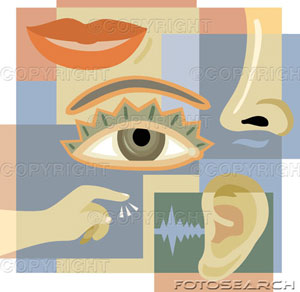
The Five Senses: Sight, Hearing, Touch, Smell, and Taste are like windows for our consciousness to gaze out into the world and perceive what is going on out there. What I find very interesting is that while the senses are the most immediately obvious way to gain knowledge about the world, there quickly comes a point where we have reached the limits of sense-knowledge and need to rely on something that we can't immediately use our senses to perceive, and that is where Reason kicks in.We use our rational minds to come up with things as grounded in science (but still only theoretical) as String Theory, or something as metaphysical as the Theory of Forms (I'm a big fan of Plato's theory, and plan on writing an article about it sometime soon!).
So, we can use Reason in two accepted ways: We can make judgements based off information gathered through the sense-windows, making conclusions we believe are justified by the evidence that we can see, touch, etc. This is called Empiricism (Perception + Reason = Empiricism).
 But we can also attain to knowledge about the empirical world using rational reasoning alone. Let us say, for example, that a nasty ol' snake-oil salesman came up to me with a box and said that if I paid him 5,000$ he would lift open the lid on the box and show me Icy Fire. That is, of course, impossible, because it is contradictory for Icy Fire to exist. I wouldn't need to pay you 500$ to know that what you are trying to claim is false. There is ice, and there is fire, but there is not Icy Fire. The belief that most or all things can be known through reason alone is Rationalism.
It is important to note that our Rationality can be tricked by our senses, and that is why it is important to always stay on guard.
I believe that our senses can mislead us in two ways: Illusions of perception, and Desire.
An example of sensory illusions is this: I remember, one time, I was having a sleepover at my friend Griffin’s house, and we were in his basement. It was very dark, and of course we are rowdy, talkative teenagers so it was well-past midnight. We looked out of the window and I became terrified, and he asked me why. I said that there was a creepy old lady staring at us through the window. He looked at it from my angle and said the same thing. We were both fairly certain there wasn't actually someone looking at us, because it seems unlikely that this would happen and that an elderly lady could just be staring there motionlessly. The next morning when the sun came up the demon was revealed to only be a formation of dust on the wall - the angle I was looking at it from and the level of light available to me tricked my eyes into thinking it was a creepy, elderly face.
In other words, my senses tell me: There is a demon staring at us through the window! But my reasoning says: There must be something up...
An example of our senses being fooled by desire is this: Earlier this year I decided I would start eating healthy. I do not believe that ignorance is bliss, I believe that only the ignorant and the lazy think that. Instead I prescribe by “bliss is knowledge” by virtue of it being real and that ignorance is actually one of the purest expressions of suffering. So I gave up chocolate, candy, fast food, chips, pop, - the whole bit.
 Because I have been eating this stuff for so long my body was addicted to it in a sense, and as a result of that the first week was like a withdrawal period. I had to struggle, to remind myself that the food is unhealthy regardless of how good it tastes, etc. I was experiencing, for myself, the classic example of our Reason leading us out of temptation. This is a very religious thing, a very ascetic thing, but Temperance is surely one of the oldest uses of Reason.
Now I find my body is extremely cautious towards letting anything get into my body and lets my mind decide instead, and I find I am healthier, with more energy and concentration. Sacrificing short-term pleasure for long-term gain has paid off!
So not only can our rational minds guide our senses (as in the example above) it can also tame them.
This second example of reason leading us out of pointless & destructive desires is called Temperance, one of the Four Cardinal Virtues. This is important to note because I believe as Socrates believed, that to be Rational is to be Ethical, and vice-versa.
When I went through my phase of quitting so many bad habits,I became extremely interested in why my body was so averse to quitting foods that were obviously unhealthy for it. Then, I read the research of biologist Niko Tinbergen. Niko Tinbergen discovered that animals are easily fooled by supernormal (alternatively called “super-real”) stimuli. The parents of songbirds would prefer to feed fake baby birds with mouths wider than their real children. Male stickleback fish would ignore real rivals in order to attack wooden replicas with brightly painted underbellies. The sensuous instincts of the animals were hijacked and harmed as a result of that.
But, there is already an animal that is quite familiar with super-real stimuli..... Humankind!
After all, while our technology is fantastic and all it outran our instincts a long time ago and the same brain that was made to cope with the Savannah's of Africa must now survive in an environment of refined foods that are saltier and tastier than anything that was ever available to our ancestors, technology that can immerse us into another world, and pornography. Is it any wonder, then, that the American Society of Addiction Medicine (ASAM) includes pornography, video games, and junk food?
What I gather from all this is that while animals are led along by their senses and are even “captured” by them, unable to act differently to what they see or hear regardless of how real it is. A human, using his rational intellect, can differentiate between the real and the unreal, between the beneficial and the harmful, and choose between them for his betterment.

I guess Aristotle was right when he said we are the “Rational Animal”: Animals + Intellect = Humans. I believe this following statement is right regardless of your cosmological stance: Humans should allow their reason to dominate and guide their senses, otherwise their senses will dominate and guide their reasons. If you are an evolutionist, then you must not allow millions of years of evolution to go to waste by not making use of that rational mind, and exercise your unique, Nature-given capability to reason and control yourself. If you are a creationist, than God surely gave you a rational mind to elevate you beyond the level of mere animals so you should exercise it.
After all, are not most of the traditionally accepted Ethics based on that above foundation? My senses tell me to be gluttonous, my reason tells me to be temperate. My animal mind wants me to steal, my human mind wants me to be charitable. My inner animal wants me to kill and compete, but the better angels of my nature want me to be merciful and just.
The Five Senses: Sight, Hearing, Touch, Smell, and Taste are like windows for our consciousness to gaze out into the world and perceive what is going on out there. What I find very interesting is that while the senses are the most immediately obvious way to gain knowledge about the world, there quickly comes a point where we have reached the limits of sense-knowledge and need to rely on something that we can't immediately use our senses to perceive, and that is where Reason kicks in.We use our rational minds to come up with things as grounded in science (but still only theoretical) as String Theory, or something as metaphysical as the Theory of Forms (I'm a big fan of Plato's theory, and plan on writing an article about it sometime soon!).
So, we can use Reason in two accepted ways: We can make judgements based off information gathered through the sense-windows, making conclusions we believe are justified by the evidence that we can see, touch, etc. This is called Empiricism (Perception + Reason = Empiricism).
It is important to note that our Rationality can be tricked by our senses, and that is why it is important to always stay on guard.
'Know the Self to be sitting in the chariot, the body to be the chariot, the intellect the charioteer, and the mind the reins .'I think that paragraph from the Katha Upanishads (part of a collection of scriptures from Hinduism called The Upanishads) illustrates the ideal relationship between the different parts of ourselves.
'The senses they call the horses, the objects of the senses their roads. When he (the Highest Self) is in union with the body, the senses, and the mind, then wise people call him the Enjoyer.'
He who has no understanding and whose mind (the reins) is never firmly held, his senses (horses) are unmanageable, like vicious horses of a charioteer.''But he who has understanding and whose mind is always firmly held, his senses are under control, like good horses of a charioteer.'
I believe that our senses can mislead us in two ways: Illusions of perception, and Desire.
An example of sensory illusions is this: I remember, one time, I was having a sleepover at my friend Griffin’s house, and we were in his basement. It was very dark, and of course we are rowdy, talkative teenagers so it was well-past midnight. We looked out of the window and I became terrified, and he asked me why. I said that there was a creepy old lady staring at us through the window. He looked at it from my angle and said the same thing. We were both fairly certain there wasn't actually someone looking at us, because it seems unlikely that this would happen and that an elderly lady could just be staring there motionlessly. The next morning when the sun came up the demon was revealed to only be a formation of dust on the wall - the angle I was looking at it from and the level of light available to me tricked my eyes into thinking it was a creepy, elderly face.
In other words, my senses tell me: There is a demon staring at us through the window! But my reasoning says: There must be something up...
An example of our senses being fooled by desire is this: Earlier this year I decided I would start eating healthy. I do not believe that ignorance is bliss, I believe that only the ignorant and the lazy think that. Instead I prescribe by “bliss is knowledge” by virtue of it being real and that ignorance is actually one of the purest expressions of suffering. So I gave up chocolate, candy, fast food, chips, pop, - the whole bit.

Now I find my body is extremely cautious towards letting anything get into my body and lets my mind decide instead, and I find I am healthier, with more energy and concentration. Sacrificing short-term pleasure for long-term gain has paid off!
So not only can our rational minds guide our senses (as in the example above) it can also tame them.
This second example of reason leading us out of pointless & destructive desires is called Temperance, one of the Four Cardinal Virtues. This is important to note because I believe as Socrates believed, that to be Rational is to be Ethical, and vice-versa.
When I went through my phase of quitting so many bad habits,I became extremely interested in why my body was so averse to quitting foods that were obviously unhealthy for it. Then, I read the research of biologist Niko Tinbergen. Niko Tinbergen discovered that animals are easily fooled by supernormal (alternatively called “super-real”) stimuli. The parents of songbirds would prefer to feed fake baby birds with mouths wider than their real children. Male stickleback fish would ignore real rivals in order to attack wooden replicas with brightly painted underbellies. The sensuous instincts of the animals were hijacked and harmed as a result of that.
But, there is already an animal that is quite familiar with super-real stimuli..... Humankind!
After all, while our technology is fantastic and all it outran our instincts a long time ago and the same brain that was made to cope with the Savannah's of Africa must now survive in an environment of refined foods that are saltier and tastier than anything that was ever available to our ancestors, technology that can immerse us into another world, and pornography. Is it any wonder, then, that the American Society of Addiction Medicine (ASAM) includes pornography, video games, and junk food?
What I gather from all this is that while animals are led along by their senses and are even “captured” by them, unable to act differently to what they see or hear regardless of how real it is. A human, using his rational intellect, can differentiate between the real and the unreal, between the beneficial and the harmful, and choose between them for his betterment.

awesome artwork called "Reason Vs. Instinct", original photo by Onikaizer. Instinct is portrayed as the animal mis-match monster on the left, and reason as the mechanical entity on the right.
I guess Aristotle was right when he said we are the “Rational Animal”: Animals + Intellect = Humans. I believe this following statement is right regardless of your cosmological stance: Humans should allow their reason to dominate and guide their senses, otherwise their senses will dominate and guide their reasons. If you are an evolutionist, then you must not allow millions of years of evolution to go to waste by not making use of that rational mind, and exercise your unique, Nature-given capability to reason and control yourself. If you are a creationist, than God surely gave you a rational mind to elevate you beyond the level of mere animals so you should exercise it.
After all, are not most of the traditionally accepted Ethics based on that above foundation? My senses tell me to be gluttonous, my reason tells me to be temperate. My animal mind wants me to steal, my human mind wants me to be charitable. My inner animal wants me to kill and compete, but the better angels of my nature want me to be merciful and just.
Friday, May 31, 2013
Knowledge is Infinite: The Good and The Bad
In earlier times, the knowledge that a society possessed was trapped in a small geographical space - a country, town, community, kingdom, etc. Then, the Industrial Revolution put more information into the hands of more people with the invention of the Gutenburg printing press, which made books and the like affordable for all. Now, we are experiencing another revolution, The Digital Revolution, and the information available at our hands 24/7 is increasing exponentially.
Over the last decade the Internet has opened up our ability to research anything under the sun. The internet doubles every 5 years - that is new bloggers with new things to say (like me!), new scientists with new findings to report, new writers with new stories to tell. Because the information already available to us is so incalculably vast, and the information that has yet to be discovered, invented, etc is scarce to be imagined, I conclude that KNOWLEDGE IS INFINITE. How exciting!! The more we learn, the more we realize the truth of Socrates's old adage: "I know that I know nothing". Learning the truth goes hand-in-hand with realizing how ignorant we really are.
The quest for knowledge is therefore literally never ending. But it is far from a perfect delight. As with anything there are pros and cons. Whereas in the past because information was so hard to come by the biggest threat to freedom was censorship, now in the 21st century the biggest threat to freedom is TOO MUCH INFORMATION. After all, who needs to ban a book if nobody will read it when they are distracted by twitter, facebook, gossip, useless news, and trivialities?
Sorry if I insulted your respected and hard-earned Masters Degree in Memeology. We must separate the wheat from the chaff if we want to grow, make new discoveries and connections, perceive new patterns, etc.

So with all of the above kept in mind, a big problem that I can foresee developing in today's world is learning to differentiate between DATA, INFORMATION, KNOWLEDGE, and WISDOM.
DATA = Collections of facts.
INFORMATION = Data that has been processed into systems that make it easy to understand.
KNOWLEDGE = Information that has been comprehended through study, analyzing, memorization, concentration, etc.
WISDOM = Knowledge that has been applied very often and deeply understood.
This is, I think, easy to understand.
There is a clear progression:
 INFORMATION + COMPREHENSION = KNOWLEDGE, KNOWLEDGE + APPLICATION = WISDOM. You can also see a big leap from Knowledge to Wisdom: while Knowledge is the ability to have confidence on a given subject and is gained from book-smarts, Wisdom is an ability to make correct judgement-calls and is gained from personal experience.
Think of it this way: A man is given a note to copy down in class about the brain, and then has to use it to answer a question-sheet based on that note. He possess INFORMATION about the brain. The man studies, and perhaps even appreciates, the topic very deeply and aces his exam about the brain. He KNOWS what he is talking about. Then, he becomes a respected Neurosurgeon. Now he is truly WISE about his topic. He could probably teach it to others by passing down what he understands so they could go through the whole process like he just did.
This is also a clear way of distinguishing a bookworm from a sage. The bookworm could tell you about his topic, but a sage will simply live it. A sage's life is a testament to his wisdom - he does not need PHD's, doctorates, published books, etc.
So while the modern world offers us an unprecedented amount of information in just about any and every medium imaginable, as individuals and as a society we have yet to learn how to separate the wheat from the chaff. After all, in the end, we don't want information or data - we want WISDOM.
Because knowledge is infinite, it is far better to have a deep understanding of a few topics than to have a superficial understanding of just about everything. In the past, it was possible for someone to know and apply every topic under the sun because the knowledge available was small. But not anymore. Quality is better than quantity when it comes to information.
The internet has the power to make self-education the best kind of education, a prospect that has never existed before in the whole history of mankind.
Awesome.
Awesome sites to help you learn:
1. Ted Talks
2. Epipheo
3. Mindfulness
Over the last decade the Internet has opened up our ability to research anything under the sun. The internet doubles every 5 years - that is new bloggers with new things to say (like me!), new scientists with new findings to report, new writers with new stories to tell. Because the information already available to us is so incalculably vast, and the information that has yet to be discovered, invented, etc is scarce to be imagined, I conclude that KNOWLEDGE IS INFINITE. How exciting!! The more we learn, the more we realize the truth of Socrates's old adage: "I know that I know nothing". Learning the truth goes hand-in-hand with realizing how ignorant we really are.
The quest for knowledge is therefore literally never ending. But it is far from a perfect delight. As with anything there are pros and cons. Whereas in the past because information was so hard to come by the biggest threat to freedom was censorship, now in the 21st century the biggest threat to freedom is TOO MUCH INFORMATION. After all, who needs to ban a book if nobody will read it when they are distracted by twitter, facebook, gossip, useless news, and trivialities?
"Where is the wisdom we have lost in knowledge?Where is the knowledge we have lost in information?" - T.S. Eliot, The Rock
Sorry if I insulted your respected and hard-earned Masters Degree in Memeology. We must separate the wheat from the chaff if we want to grow, make new discoveries and connections, perceive new patterns, etc.

So with all of the above kept in mind, a big problem that I can foresee developing in today's world is learning to differentiate between DATA, INFORMATION, KNOWLEDGE, and WISDOM.
DATA = Collections of facts.
INFORMATION = Data that has been processed into systems that make it easy to understand.
KNOWLEDGE = Information that has been comprehended through study, analyzing, memorization, concentration, etc.
WISDOM = Knowledge that has been applied very often and deeply understood.
This is, I think, easy to understand.
 INFORMATION + COMPREHENSION = KNOWLEDGE, KNOWLEDGE + APPLICATION = WISDOM. You can also see a big leap from Knowledge to Wisdom: while Knowledge is the ability to have confidence on a given subject and is gained from book-smarts, Wisdom is an ability to make correct judgement-calls and is gained from personal experience.
Think of it this way: A man is given a note to copy down in class about the brain, and then has to use it to answer a question-sheet based on that note. He possess INFORMATION about the brain. The man studies, and perhaps even appreciates, the topic very deeply and aces his exam about the brain. He KNOWS what he is talking about. Then, he becomes a respected Neurosurgeon. Now he is truly WISE about his topic. He could probably teach it to others by passing down what he understands so they could go through the whole process like he just did.
This is also a clear way of distinguishing a bookworm from a sage. The bookworm could tell you about his topic, but a sage will simply live it. A sage's life is a testament to his wisdom - he does not need PHD's, doctorates, published books, etc.
So while the modern world offers us an unprecedented amount of information in just about any and every medium imaginable, as individuals and as a society we have yet to learn how to separate the wheat from the chaff. After all, in the end, we don't want information or data - we want WISDOM.
Because knowledge is infinite, it is far better to have a deep understanding of a few topics than to have a superficial understanding of just about everything. In the past, it was possible for someone to know and apply every topic under the sun because the knowledge available was small. But not anymore. Quality is better than quantity when it comes to information.
The internet has the power to make self-education the best kind of education, a prospect that has never existed before in the whole history of mankind.
"I don't let my schooling interfere with my education" - Mark Twain
I know this from personal experience, because a lot of the things that I am the most interested in are taught on the internet - not school. So if you want to become knowledgeable in a world where it was never easier, you need to develop concentration. Concentration is critical to learning and retaining new things. If you are reading about the GREATEST IDEA EVER, something that will change your life radically if you apply it, but get distracted by your Ipod, Email, television, etc, then whatever you may have been learning about the greatest idea ever has been replaced by this new, superficial information.
If you are always surrounded by technology, then you are living in an almost constant state of distraction. It is like living with mist obscuring your vision 24/7: you can see, but not clearly enough. The calmer, more contemplative modes of thinking are what really allow for Wisdom to sink in and for Inspiration to dawn on us.
The only way to make the kind of transformative connections between what you read on the 'net and your actions is through this quieter, contemplative mode of thinking. This is why I think Meditation and Mindfulness are quickly becoming more popular. It is as if they are the only way to survive in the Digital Age, remain sane, and take advantage of the new mental landscapes. There are a wealth of resources on the internet that can help you learn Meditation and Mindfulness, which will help you differentiate information from wisdom, and become truly Wise.
So? What are you waiting for? All the wisdom you could ever have is available to you, waiting to be understood, to be refreshed, to have new connections made to it, and then finally, for you yourself to consider yourself a proud contributor to Humanity's never ending library. All you need is a little concentration and a little motivation.
Awesome.
Awesome sites to help you learn:
1. Ted Talks
2. Epipheo
3. Mindfulness
Friday, May 17, 2013
Doing Nothing (poem)
No matter what, I'm always doing something.
Can't sit still, because of this incessant feeling,
This feeling that pushes me to seek activity,
stimulation, motion, and ultimately, captivity,
to being a participant in this worldly rat race.
But no more: Today I will confront it face-to-face.
Today I will do the impossible.
Today I am going to do Nothing.
Sunday, May 12, 2013
The Reconciliation of Apollo & Dionysus
Nietzsche talks about the dichotomy of the Apollonian and the Dionysian. Apollo is the self-controlled solar deity, a god of reason and culture. Dionysus is the passionate chthonic god of intoxication and the wild things.
I believe that these archetypes exist within all of us, to greater and lesser degrees. If not, they certainly do in myself.

The Dionysian Man's goal is pleasure. We can never satisfy our desire for pleasure: More pleasure leads to less pleasure because every time we reach a higher octave of pleasure we may never reach it again, making every bit of pleasure lesser than that seem pointless. Our response to pleasure becomes numbed, so we need more and more of it, like any drug addict knows. This is called desensitization. Also, our memory of the pleasure sticks out in our mind very powerfully, making us feel more motivated to pursue that than other things, and our willpower erodes as we are unable to deny ourselves and do not expel nearly as much energy doing other things.
So self-denial leads to more pleasure in the end, weirdly. If we control pleasure we are not controlled by it, and instead of roiling in the grosser aspects of life we can learn to appreciate the inner, subtler pleasures. The suppression of the flesh is the empowerment of the spirit!

The Apollonian Man's life is goal-oriented. The dark side of this is that it feeds our insecurities and we must all live up to non-existent ideals. Our inner critic tells us that what we do is not good enough. But it never is. We get too wrapped up in ourselves and can never satisfy our own or society's ideal of perfection that we are all trying to reach. You end up feeling envious of others and worthless even if you are something of a prodigy, because there is always a "bigger fish", and you can't be great at what you are great at all the time.
I am not saying you shouldn't strive for betterment, but it can sometimes be like a dog chasing his own tail. Are you always looking for something new to be better at, or the newest self-improvement, self-help strategy? Do you always want to be the perfect you? If so, you are chasing after a goal that will never exist.
Self-acceptance is the cure for this and leads to more self-betterment in the end, since it is better for us and we can make improvements in the areas of life that are more really important.
Because these two different deities represent two of what may be our greatest drives, we want to experience them both. We like to think that these two people in ourselves can be balanced. but unfortunately by thinking that we receive only the worst of both and the best of neither: we get the erosion of willpower that comes with being chaotic but without the full explosive pleasure of hedonism, and we get the pressure that comes with being orderly but without that heartening "pat yourself on the back" feeling. So I don't think many people can live without having one archetype dominate over the other.
After all, in a sense they are almost mutually exclusive: In order to put in the effort that Apollo demands of us we must deny ourselves and concentrate. But if we want what Dionysus wants then you must let go of those Apollonian inhibitions.
In light of that opinion in the paragraphs above, though, I think that in the end the best of both comes out when they are reconciled as opposed to balanced. I mentioned how Dionysus and his pursuit of pleasure is self-destructive, and corrected with self-denial, which is of course an Apollonian trait. Then, Apollo and his desire to be the biggest and the best is cured with self-acceptance, which is an emotional trait of the playful Dionysus.
So, in light of all this information, which archetype think dominates in yourself? Having experienced the extremes of both in my life I think my personality has settled on the Apollonian. But I'd love to hear from people who comment what they think of both the dichotomy and which archetype is stronger/better.
I believe that these archetypes exist within all of us, to greater and lesser degrees. If not, they certainly do in myself.

The Dionysian Man's goal is pleasure. We can never satisfy our desire for pleasure: More pleasure leads to less pleasure because every time we reach a higher octave of pleasure we may never reach it again, making every bit of pleasure lesser than that seem pointless. Our response to pleasure becomes numbed, so we need more and more of it, like any drug addict knows. This is called desensitization. Also, our memory of the pleasure sticks out in our mind very powerfully, making us feel more motivated to pursue that than other things, and our willpower erodes as we are unable to deny ourselves and do not expel nearly as much energy doing other things.
So self-denial leads to more pleasure in the end, weirdly. If we control pleasure we are not controlled by it, and instead of roiling in the grosser aspects of life we can learn to appreciate the inner, subtler pleasures. The suppression of the flesh is the empowerment of the spirit!
"Ever fed, never satisfied. Never fed, ever satisfied"
- Paramahansa Yogananda

The Apollonian Man's life is goal-oriented. The dark side of this is that it feeds our insecurities and we must all live up to non-existent ideals. Our inner critic tells us that what we do is not good enough. But it never is. We get too wrapped up in ourselves and can never satisfy our own or society's ideal of perfection that we are all trying to reach. You end up feeling envious of others and worthless even if you are something of a prodigy, because there is always a "bigger fish", and you can't be great at what you are great at all the time.
I am not saying you shouldn't strive for betterment, but it can sometimes be like a dog chasing his own tail. Are you always looking for something new to be better at, or the newest self-improvement, self-help strategy? Do you always want to be the perfect you? If so, you are chasing after a goal that will never exist.
Self-acceptance is the cure for this and leads to more self-betterment in the end, since it is better for us and we can make improvements in the areas of life that are more really important.
"If your compassion does not include yourself, it is incomplete" - Jack Kornfield.
Because these two different deities represent two of what may be our greatest drives, we want to experience them both. We like to think that these two people in ourselves can be balanced. but unfortunately by thinking that we receive only the worst of both and the best of neither: we get the erosion of willpower that comes with being chaotic but without the full explosive pleasure of hedonism, and we get the pressure that comes with being orderly but without that heartening "pat yourself on the back" feeling. So I don't think many people can live without having one archetype dominate over the other.
After all, in a sense they are almost mutually exclusive: In order to put in the effort that Apollo demands of us we must deny ourselves and concentrate. But if we want what Dionysus wants then you must let go of those Apollonian inhibitions.
In light of that opinion in the paragraphs above, though, I think that in the end the best of both comes out when they are reconciled as opposed to balanced. I mentioned how Dionysus and his pursuit of pleasure is self-destructive, and corrected with self-denial, which is of course an Apollonian trait. Then, Apollo and his desire to be the biggest and the best is cured with self-acceptance, which is an emotional trait of the playful Dionysus.
So, in light of all this information, which archetype think dominates in yourself? Having experienced the extremes of both in my life I think my personality has settled on the Apollonian. But I'd love to hear from people who comment what they think of both the dichotomy and which archetype is stronger/better.
Saturday, April 27, 2013
Beyond Words
(This is, in a sense, a follow-up to another blog-post I wrote: "Illusions in Language".)
 Perhaps the prisoner who escaped in Plato's famous allegory first considered that there is something outside of that box, and as a result of that went on his way to perceiving it, or experiencing it, because he has become open to that.
 The reason why I have brought all of this up is because people who claim to be spiritual do not want to exude the necessary effort to experience the states that they believe in so deeply, but which are nonetheless very attainable. Having an out-of-body experience, or a deep meditation, transforms you radically because you have reached beyond your conventional experience of reality and experience something totally new.
Likewise, the words "tranquility" and "stillness" don't hold a candle to the actual experiences of deep meditation. I heard those words used in relation to meditation before, but that didn't prepare me for being in those states.
I can perceive things without having words. Things exist apart from thoughts.
The British proponent of Zen, “Alan Watts”, often talked about how too much thoughts and words muddle your perception. He said,“You don’t have to understand things in words in order to make something happen”. You don’t have to understand in words how you breathe, you just breathe. Someone who does understand how to breathe can’t do it any better than you do. You do not need to have a word for the colors red and blue, you just see the colors.
.jpg)

Having the belief that perceptions and words are identical is not only wrong, it is dangerous, because then, like most of the world, you cannot “get out of your head” and perceive things just as they are without words, and then your language becomes a kind of box that you cannot see out of because you have spent your whole life in the box. You assume that just as words describe things that are familiar and well understood, that everything there is to know and experience is already familiar and well understood one way or another.
If we are too in touch with thoughts and words we are not in touch with reality. We must not confuse the world as it is with the world as we see it, as we think about it, talk about it, describe it. On one hand, you have Reality. On the other, you have symbols. Those symbols are useful - no question about that for even half of a second. But, just as we confuse money for real wealth and may use it as a substitute for real wealth, we confuse the symbols with the reality behind them and use it as a substitute for Reality.
Now, to move on to my next point, I want you to Imagine this: your language is part of your own personal Plato's Cave. The prisoners trapped in the cave have a language formed from there illusory life experience in the cave. They don't have words for the sun, or for animals, etc because they have never experienced those things. They can't form thoughts in there heads about those things, because again they have no concept of them. There language is very limiting, but they don't know it.
 Perhaps the prisoner who escaped in Plato's famous allegory first considered that there is something outside of that box, and as a result of that went on his way to perceiving it, or experiencing it, because he has become open to that.
When the prisoner experiences that thing outside of the box, it is nothing more than a consciousness-expanding moment. His awareness is stretched like a rubber band.
That man, the prisoner who escapes the cave, has no words for the experiences that are happening to him. The limits of his world have reached beyond the narrow halls of language.
I am a very lucky man, because I know what it is like to reach beyond words! I know what it is like to be so stupefied by your experiences that the language faculty shuts down so all you are left with is raw experience.
When I first had an out of body experience it totally changed my view of the world. I felt like that prisoner who left Plato's Cave, and that the rest of the people were still stuck in that cave. I have no words for the sounds, sights, and sensations of the out-of-body state, but I am familiar enough with them to know how to react and to know what they mean.

Likewise, the words "tranquility" and "stillness" don't hold a candle to the actual experiences of deep meditation. I heard those words used in relation to meditation before, but that didn't prepare me for being in those states.
In closing, "The map is not the territory". The guide to having an experience is not a substitute for the experience.
(Soon, I will be posting articles on how to have very vivid dreams, lucid dreams, & out-of-body experiences, as well as how to remember them and prolong them. Stay tuned!)
Subscribe to:
Posts (Atom)